From Uncertainty to Opportunity: Umutesi Solange's Conservation Journey in Rwanda
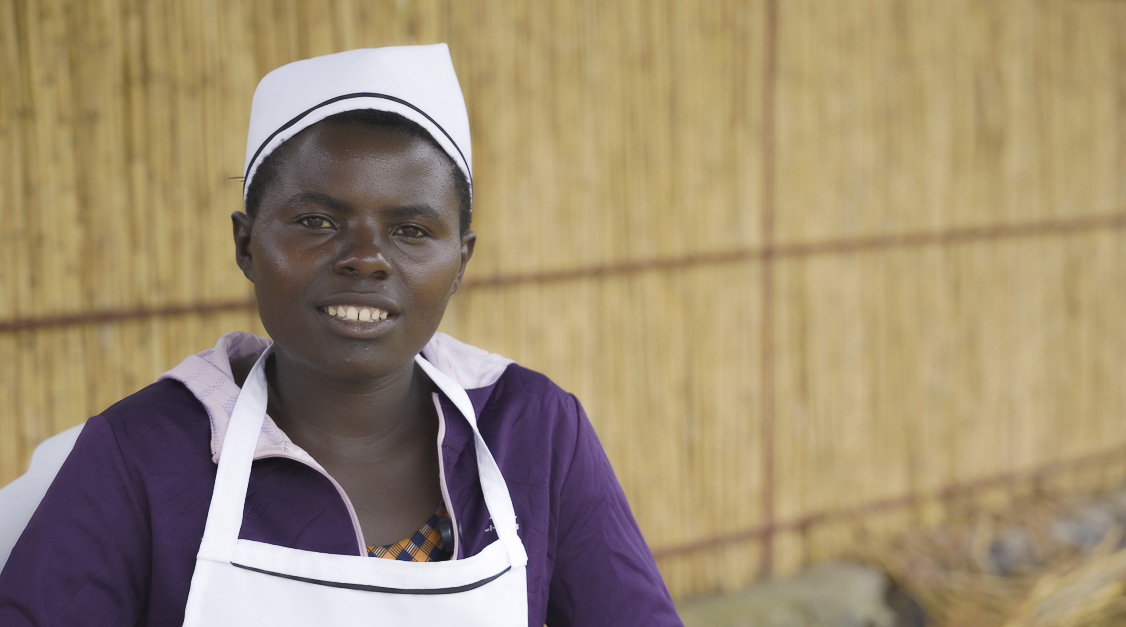
Umutesi Solange, a Culinary Arts student in Rwanda.
At the foothills of Rwanda’s Volcanoes National Park in the Northern Province, the phrase “park expansion” can sound like an end. For Umutesi Solange, a culinary arts student in Musanze District, it became a beginning.
“If it hadn’t been for the park expansion project, I doubt that learning at a Technical and Vocational Training Institute would have been easy for me or that it would have helped me change my mindset,” Solange reflects.
Like many young mothers in communities affected by the expansion, Solange grew up with limited opportunities and uncertainty about what came next. That began to change through the Smart Green Village Social Assistance and Behavior Change Project, which supports families preparing to relocate while helping young people access training aligned with the wider Volcanoes landscape transition.
A Smart Green Village Built for Resilience
The Smart Green Village is an integrated, climate-resilient settlement model under development alongside the Volcanoes National Park expansion and livelihood restoration program.
Phase one includes relocating 510 households to a designated site as part of a first-phase expansion covering 732.5 hectares. At the household level, the model includes approximately 510 housing units, averaging 75 square meters per family on 300 square-meter plots, built to modern safety standards with passive ventilation and, where appropriate, locally sourced materials such as timber and bamboo.
The village will provide a clean water supply, water collection and reuse systems, affordable and sustainable electricity options such as solar, and sanitation systems designed to reduce health risks, including waterless composting toilets that convert waste into fertilizer as part of a circular-economy approach.
Beyond housing, the design includes a health center, an early childhood center, a mini market, a multipurpose hall for local leadership, and an ICT room for accessing government e-services.
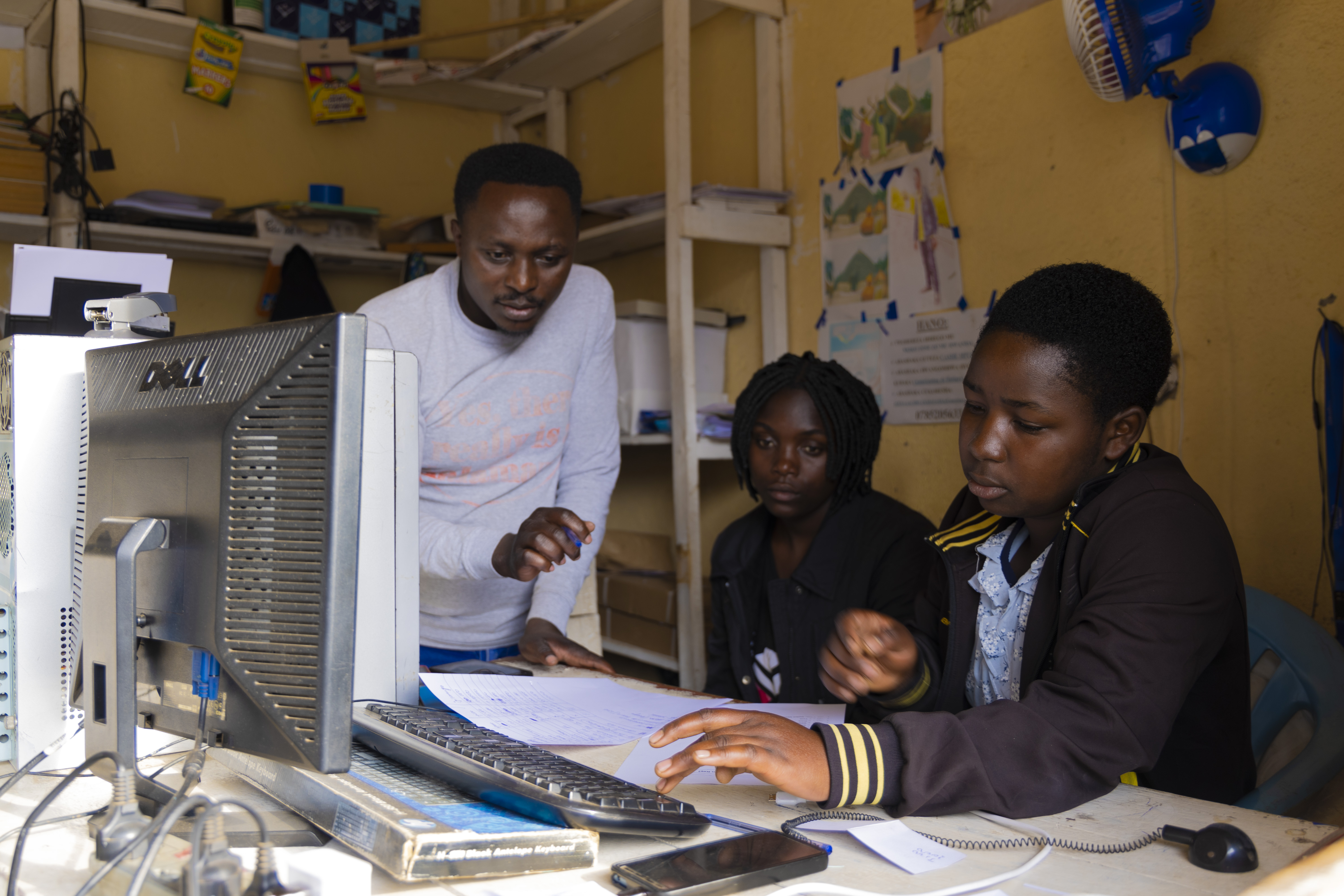
A student receives instruction on computer skills.
AWF’s work in this landscape is part of a broader partnership with the Government of Rwanda to align conservation outcomes with long-term development priorities for communities bordering Volcanoes National Park. The approach couples resettlement planning with livelihood restoration and ongoing community engagement because relocation alone is not a solution unless households can rebuild stable incomes and social support in the new setting.
As part of this approach, AWF and partners have developed a Livelihood Improvement Plan that introduces 17 new livelihood options and integrates training, start-up capital, and market linkages. All support is designed to increase household income and ensure equal access to enterprise opportunities for women and youth.
Skills That Turn Conservation into Opportunity
For Solange, the skills pathway was culinary arts. The training has offered more than technical skills; it has opened a path to dignity and independence while positioning young people closer to economic opportunities in conservation and tourism.
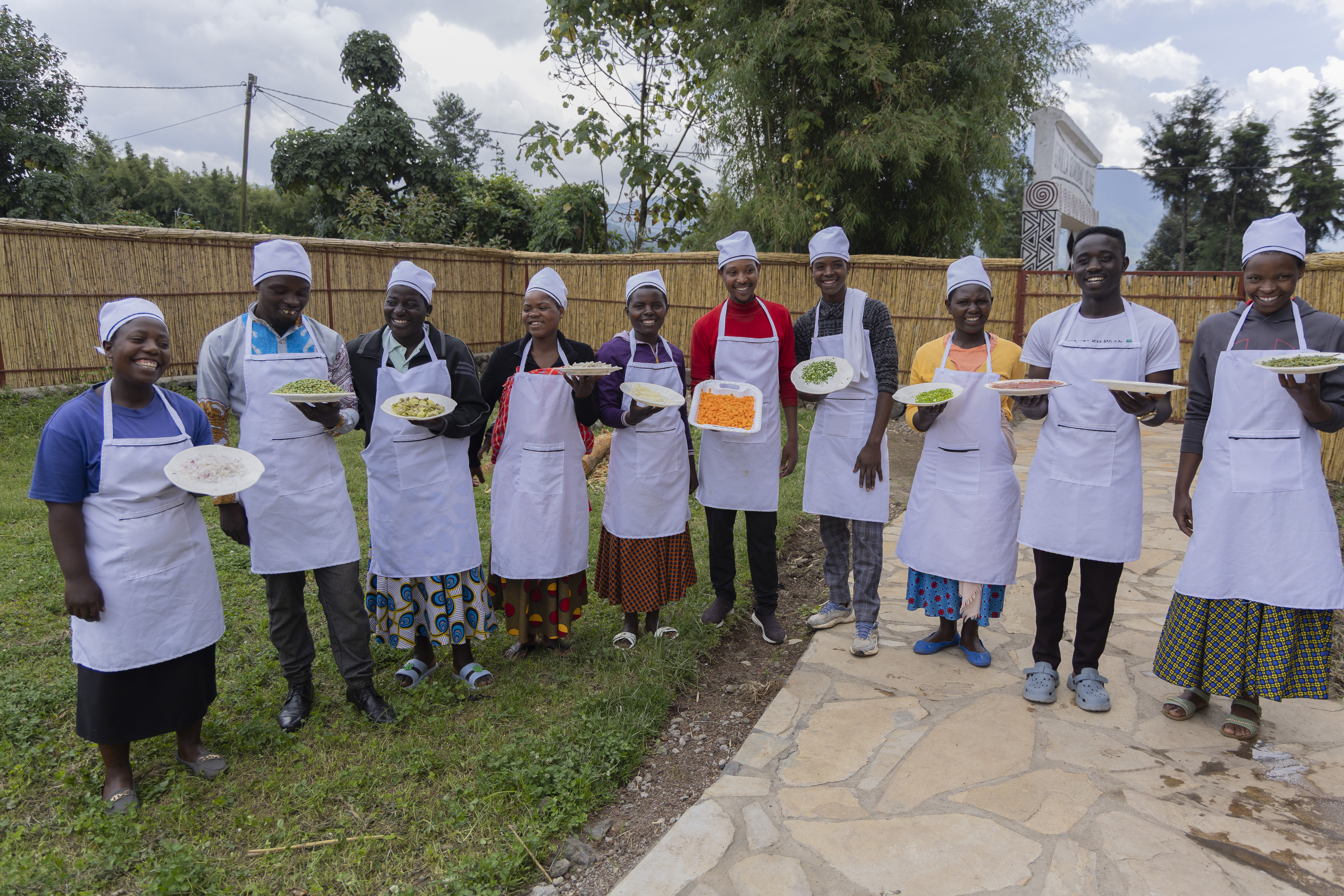
Solange with other culinary arts students.
Her progress reflects a broader shift among program participants—from being affected by conservation decisions to being equipped to benefit from them. Alongside livelihood planning, the project’s social assistance has helped families adapt to new routines and a different standard of living, enabling households to transition with fewer shocks and greater agency.
Solange is also clear about what conservation means to her now. It is no longer an abstract idea but a lived responsibility.
“I cannot stand by and watch someone abuse animals,” she says. “I intervene and ask them to stop because their actions are wrong.”
From Livelihood to Stewardship
Her peer, Manirakiza Joseph, also a culinary arts student, makes the same connection between livelihood and responsibility.
“I have now realized that animal wellbeing contributes to my own wellbeing,” Joseph says.
Their stories highlight a practical lesson: Conservation is strongest when communities can see opportunity in the work and when young people have the skills to participate on equal footing.
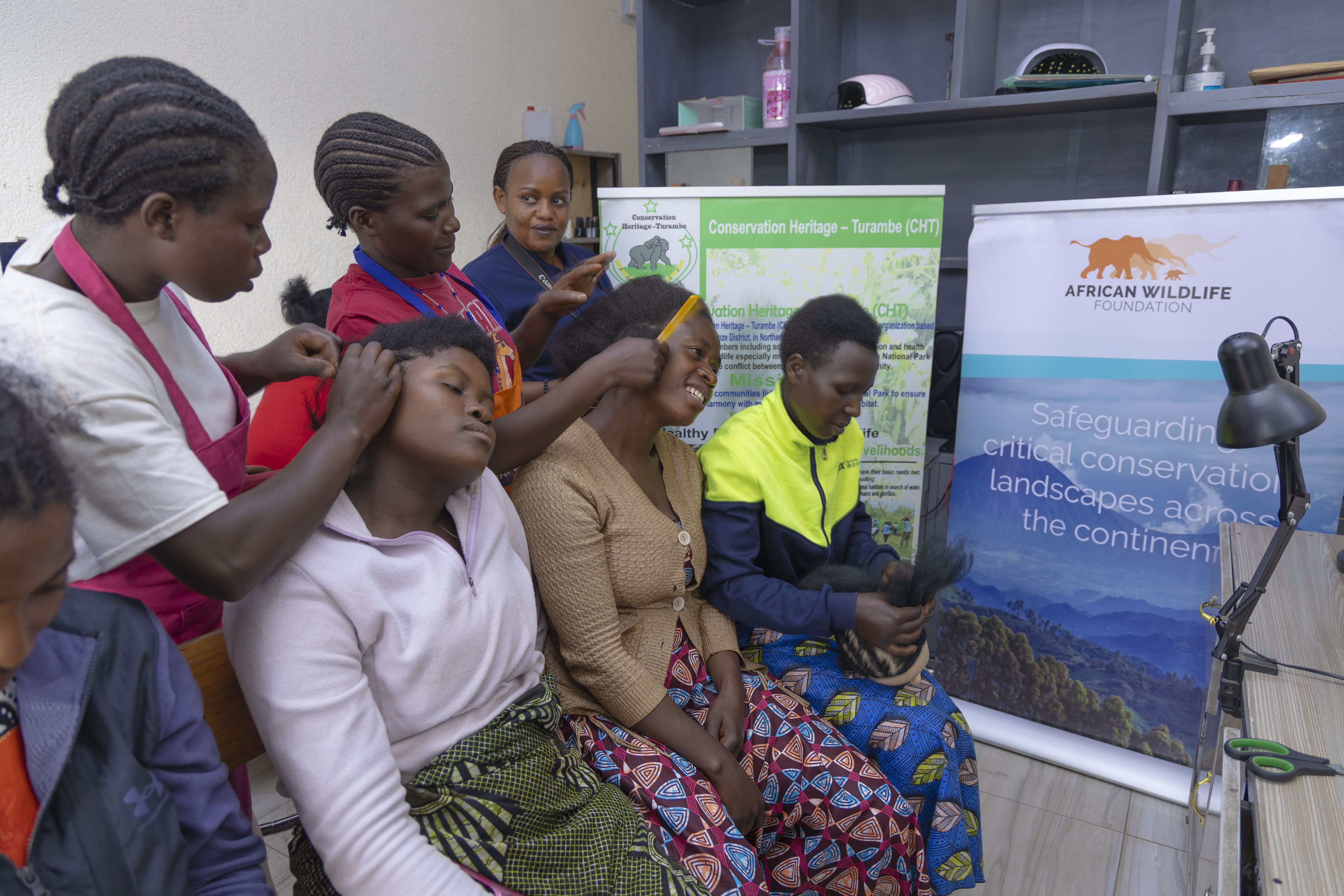
Students practice hairdressing skills.
In this part of the Virungas landscape, the Smart Green Village Initiative and youth training are helping families transition while improving conditions for gorillas and other wildlife to thrive. For Solange, the project has transformed uncertainty into opportunity, demonstrating that conservation and community development can advance together.